


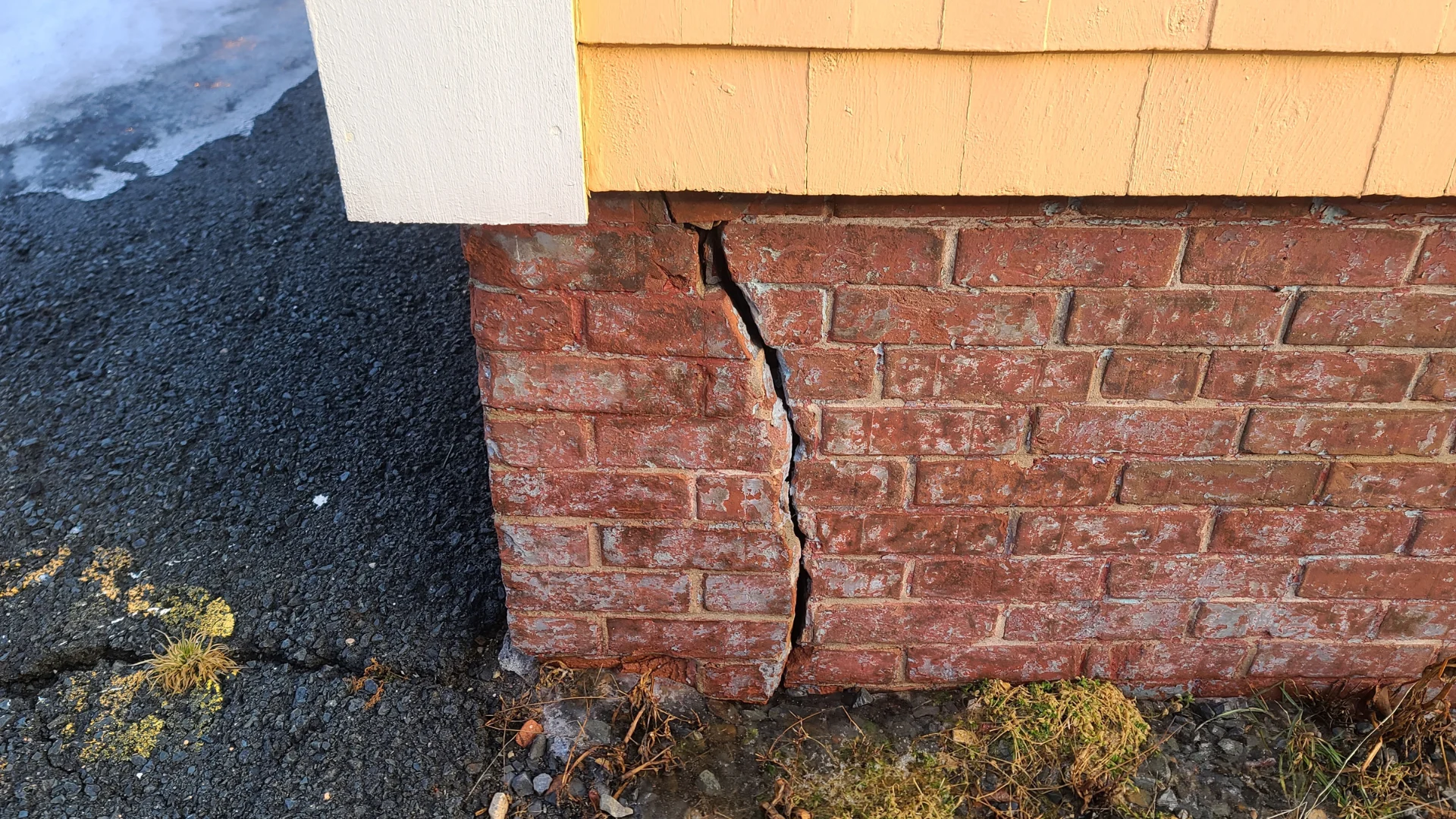
A foundation crack can be a water-entry problem, a normal sign of concrete movement, or evidence of a more serious structural issue. For a homeowner asking, “foundation crack: structural or not?”, the answer depends on more than the crack’s direction. Look for movement, displacement, bowing walls, repeated leakage, and changes elsewhere in the house.
A waterproofing contractor is usually the right first call when the main problem is water entering through an otherwise stable crack. A structural engineer should be involved when there are signs that the foundation or wall may be moving, carrying loads improperly, or requiring structural alteration.
A Foundation Crack Is Only One Part of the Diagnosis
The direction of a crack matters, but it does not tell the whole story. A narrow vertical crack that has not changed may be less concerning than a horizontal crack in a bowed wall, but width, movement, displacement, foundation type, and related symptoms all matter.
Look at the area around the crack as well as the crack itself. Doors that suddenly stop closing properly, windows that bind, visibly sloping floors, wall movement, or repeated new cracking can indicate that the issue is broader than a simple water-entry point.
City Wide Group’s information about foundation crack repair explains common crack patterns and identifies circumstances where closer structural review may be appropriate. If you’re unsure, don’t rely on crack direction alone. An assessment should consider whether the crack is stable, whether water is entering, and whether the wall or footing shows evidence of movement.
When a Waterproofing Contractor May Be the Right First Call
A waterproofing contractor is often the appropriate first call when the concern is a leaking but apparently stable foundation crack and there are no obvious signs of structural movement.
Examples include water entering through a localized vertical crack after heavy rain, dampness around a foundation opening, or leakage that follows an exterior drainage problem. The assessment should identify the water path and determine whether the crack can be repaired locally or whether a wider waterproofing system is needed.
That may involve crack injection, exterior crack repair, drainage improvements, interior drainage, or exterior waterproofing, depending on access and foundation condition. If the wall is bowing, the crack is widening, sections are displaced, or the foundation appears to be moving, structural review should come before a repair is selected.
When to Call a Structural Engineer for a Foundation Crack
A structural engineer should be involved when there are reasonable signs that the crack is related to movement or loss of structural performance rather than water entry alone.
Warning signs that deserve structural assessment include:
- horizontal cracking accompanied by inward wall movement
- a wall that is visibly bowing or leaning
- cracks with noticeable displacement from one side to the other
- cracks that are widening or changing over a short period
- multiple new cracks appearing with changes to floors, doors, or windows
- stair-step cracking in masonry where blocks or bricks are shifting
- foundation movement connected to excavation, underpinning, or another structural renovation
These conditions do not automatically mean the house is unsafe, but they should not be diagnosed from a photograph or patched without understanding the forces acting on the foundation.
City Wide Group’s broader foundation repair services address foundation concerns beyond simple water entry. Structural engineering input may still be required when a proposed repair affects the building’s structural system.
Waterproofing Contractor vs. Structural Engineer: What Each One Does
The two professionals answer different questions.
A waterproofing contractor focuses on how water is reaching the basement and how to control it. The assessment may involve foundation cracks, weeping tile, grading, sump systems, waterproofing membranes, and drainage paths.
A structural engineer evaluates whether the foundation, wall, footing, framing, or related structural components are performing safely. The engineer may assess movement, loading, wall deflection, and whether a structural repair requires engineered design.
There can be overlap. A homeowner may first notice damp flooring, then discover a crack and wall movement after finishes are removed. Waterproofing may still be necessary, but the structural condition should be understood before drainage or crack repair becomes the only focus.
What Toronto Homeowners Should Know About Underpinning
Underpinning is different from repairing a simple leaking crack. It changes or extends the existing foundation and can be used to stabilize a foundation or lower a basement.
The City of Toronto requires a building permit for residential underpinning. Its guidance also states that professional engineering is required in specific underpinning conditions, including certain work below adjacent footings and within the soil’s angle of repose.
If the assessment leads toward foundation lowering, major excavation, reinforcement, or another structural alteration, the project has moved beyond ordinary crack sealing.
City Wide Group provides basement underpinning in Toronto for projects where additional basement height or foundation stabilization is required. The scope should be based on the actual structural and site conditions, not on the presence of a crack alone.
What to Document Before Anyone Repairs the Crack
Take clear photographs with a ruler or another fixed reference beside the crack. Record the date and photograph the same area again if you are monitoring it. Note whether the crack leaks, whether leakage occurs only after rain or snowmelt, and whether the wall feels damp even when no water is visible.
Also record related changes in the house. A door that recently began sticking, a new gap at trim, or a floor that feels different may be relevant when considered with foundation movement. Don’t cover the crack with new finishes before the cause is understood. A fresh coating can hide useful evidence that a contractor or engineer would otherwise inspect.
Avoid Choosing a Repair Based Only on the Crack’s Appearance
Online diagrams often divide cracks into simple categories such as vertical equals minor and horizontal equals serious. That can be a useful starting point, but it is too simplistic for a repair decision. A vertical crack can still leak repeatedly. A masonry crack may look small while blocks on either side have shifted. The amount of movement and the condition of the wall matter as much as orientation.
This is also why estimates can vary widely. One company may be pricing water management, while another is pricing reinforcement. Before comparing price, compare what each proposal says is actually wrong.
If one assessment recommends structural reinforcement and another recommends waterproofing alone, an independent structural engineer can help clarify whether structural work is necessary before you commit to either scope.
What Happens If the Crack Is Leaking but Not Structural?
A non-structural crack can still be a serious moisture problem. Water entering repeatedly can damage finishes and indicate that drainage around the foundation is not performing as intended.
The repair may be localized if the crack is stable and surrounding drainage is functioning. In other cases, the crack is one of several entry points and a broader waterproofing approach makes more sense.
The assessment should answer three separate questions: Is the crack structurally stable? Why is water reaching it? What repair prevents the same water path from reopening or appearing nearby?
When to Get Help
Call a waterproofing professional when the primary concern is recurring water entry, especially after rain or snowmelt, and there are no obvious signs of wall movement. Ask for the source of the water to be explained before choosing a repair.
Call a structural engineer when the wall is bowing, cracks are changing, sections are displaced, or other parts of the house appear to be moving. If underpinning or structural reinforcement is being proposed, confirm what engineering and permit requirements apply.
City Wide Group works on waterproofing, foundation repair, and underpinning across Toronto and the GTA. If the initial inspection suggests a structural issue that requires engineering input, that distinction should be made before the repair scope is finalized.
Frequently Asked Questions
Does every foundation crack need a structural engineer?
No. Many foundation cracks are stable water-entry or concrete-shrinkage issues that can be assessed by an experienced foundation or waterproofing contractor. Engineering review becomes more important when there is movement, bowing, displacement, rapid change, or a proposed structural alteration.
Are horizontal foundation cracks always structural?
No, but horizontal cracks deserve careful assessment because they can be associated with lateral pressure and wall movement. The condition of the wall, any inward bowing, displacement, and whether the crack is changing are more informative than orientation alone.
Can a non-structural foundation crack still cause a basement leak?
Yes. A stable crack can provide a direct path for groundwater even when it is not affecting the foundation’s load-carrying function. The leak still needs to be diagnosed so the crack and surrounding drainage conditions can be addressed appropriately.
Can waterproofing fix a structural foundation crack?
Waterproofing can control water entry, but it does not replace structural repair when a foundation wall is moving or damaged. Structural stabilization and water management may both be required, with the sequence based on the engineer’s and contractor’s findings.
Should a leaking foundation crack be repaired from inside or outside?
Either approach may be appropriate depending on the crack, access, foundation condition, and drainage around the home. A localized interior repair may suit some stable cracks, while exterior access allows the foundation surface and surrounding drainage to be addressed directly.