


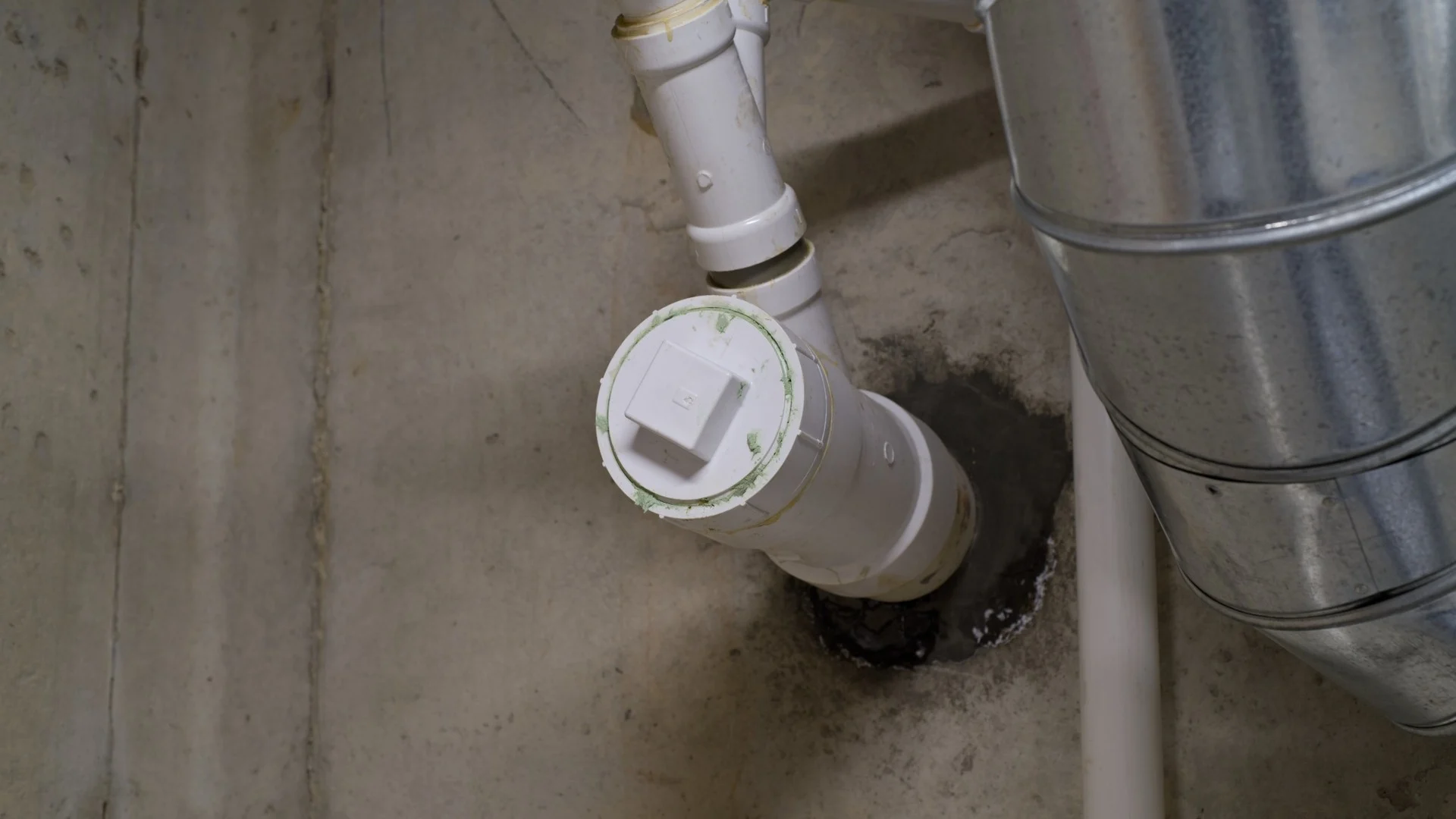
Water leaking around a basement pipe can be caused by a plumbing problem, a deteriorated seal where the pipe passes through the foundation, or groundwater entering through the surrounding wall. The right repair depends on whether water is escaping from the pipe itself or finding its way into the basement around the opening.
If you notice water leaking around a basement pipe, particularly after heavy rain or snowmelt, the problem may involve the foundation rather than the plumbing. Identifying the difference is essential because replacing a pipe will not resolve groundwater infiltration, and sealing the surrounding concrete will not repair a damaged water line.
Why Water Can Leak Around Pipes Entering a Basement Wall
Pipes and utility lines often pass through openings in a home’s foundation. These openings are called penetrations, and they must be properly sealed to prevent water from entering around them.
Basement foundation walls may contain penetrations for municipal water supply lines, sewer pipes, electrical conduits and other utility connections.
When these services are installed, an opening is created through the concrete or masonry foundation. Depending on the installation, the space around the pipe may be sealed with grout, hydraulic cement, a flexible sealing material or a purpose-designed penetration seal.
Over time, the surrounding seal may deteriorate, separate or become damaged. Movement between the pipe and the foundation can also affect its ability to remain watertight. If groundwater accumulates outside the wall, it may find a path through a poorly sealed opening. Water follows the path of least resistance. A small gap around a pipe can become an entry point even when the surrounding foundation appears sound.
Common contributing factors include:
- Deteriorated or improperly installed sealing materials.
- Small gaps between the pipe and foundation wall.
- Movement or settlement affecting the penetration.
- Cracking in the concrete or masonry surrounding the opening.
- Groundwater pressure against the foundation.
- Poor exterior drainage that increases moisture near the wall.
The presence of a pipe does not necessarily mean it is the source of the leak. In some cases, the pipe simply passes through an area where water is finding a way inside.
How to Tell a Plumbing Leak From a Foundation Waterproofing Problem
The first step is to establish whether water is leaking from the pipe or entering around its exterior. These problems can look similar, especially when the affected pipe is close to the basement floor or partially concealed behind finished walls.
Signs of a Plumbing Leak
A plumbing leak occurs when water escapes from the pipe, fitting or connection itself.
Possible warning signs include:
- Water appearing even during extended periods of dry weather.
- Dripping from a pipe joint or fitting.
- Moisture accumulating when a particular fixture is used.
- A visible crack or damaged connection.
- An unexplained increase in water consumption where a pressurized supply line is involved.
For an accessible cold-water supply line, carefully drying the pipe and checking where moisture first reappears can help identify the source. If the pipe is actively leaking, contact a qualified plumber. A damaged water supply line or drain should not be treated as a foundation waterproofing problem.
Signs of Groundwater Entering Around the Pipe
A foundation penetration leak occurs when water travels through the gap between the pipe and the surrounding wall.
Common signs include:
- Water appearing around the outside edge of the penetration.
- Dampness developing after heavy rainfall or snowmelt.
- Mineral deposits or staining around the opening.
- Moisture spreading along the foundation wall.
- Recurring seepage even though the pipe itself appears intact.
In Toronto, rainfall and melting snow can increase moisture in the soil surrounding basement foundations. When exterior drainage is inadequate, water may collect near vulnerable openings.
However, the timing of a leak is only a clue. Water can travel along pipes and wall surfaces before becoming visible, so the entry point should be confirmed before repairs begin.
Common Entry Points Around Basement Pipes and Utility Lines
Not every foundation penetration is constructed or sealed the same way. The type of pipe and its location influence how a leak should be investigated.
Main Water Supply Line
The municipal water service typically enters the home through a foundation wall or below-ground entry point. Where the service passes through the foundation, a gap or sleeve may be present. If the seal surrounding the service line fails, groundwater can enter around the pipe.
This is different from a leak in the pressurized water line itself, which may require plumbing work and coordination with the water utility. Homeowners should not attempt to excavate, disconnect or modify the incoming water service without qualified assistance.
Sewer and Drainage Pipes
Sewer and drainage pipes may pass through a basement wall or beneath the foundation floor. Moisture near these pipes can be caused by groundwater infiltration, a failed plumbing connection or a drainage problem. A sewer backup is a separate issue that may involve wastewater coming through a floor drain or plumbing fixture.
If the water has a sewage odour, contains visible waste or appears when drains are used, stop using affected fixtures and contact a qualified plumbing or drainage professional.
Electrical and Utility Conduits
Some homes have electrical or communications conduits entering through below-grade foundation walls. Any leakage near electrical equipment or wiring requires additional caution.
Do not touch wet electrical components or attempt to seal an energized conduit. If water is near electrical equipment, keep clear and arrange an assessment by a qualified electrician. Once electrical safety has been addressed, the surrounding foundation penetration can be evaluated for waterproofing deficiencies.
Why Heavy Rain and Snowmelt Can Make Pipe Penetration Leaks Worse
Water around a foundation is influenced by rainfall, soil conditions, drainage and the location of the water table. Following prolonged rainfall, moisture may accumulate in the soil surrounding basement walls.
When water builds up against the foundation, it creates hydrostatic pressure. This pressure can force water through openings, cracks and poorly sealed penetrations. An aging seal that remains dry during summer may begin leaking when groundwater conditions change. Snowmelt can create similar conditions during winter thaws and early spring.
Several exterior problems can increase the amount of water reaching the foundation:
Poor grading: Soil or hardscaping that slopes toward the house can direct surface runoff toward the basement wall.
Short or disconnected downspouts: Roof runoff discharged beside the foundation adds unnecessary moisture to the surrounding soil.
Blocked or deteriorated drainage systems: If exterior weeping tiles cannot move groundwater away effectively, water may accumulate near the footing.
Settled backfill: Soil beside the foundation can settle over time, creating depressions where water collects.
These issues do not necessarily cause the pipe seal to fail, but they can increase the amount of water reaching an existing weakness. Correcting surface drainage may reduce water exposure. It will not necessarily repair a gap that already allows groundwater through the wall.
When a Localized Pipe Penetration Repair May Be Enough
A localized repair may be appropriate when the leak is clearly limited to the pipe opening, the surrounding foundation is sound and there is no evidence of a broader drainage problem.
The repair method depends on the pipe material, penetration design, condition of the wall and amount of water pressure. Some penetrations can be resealed using compatible waterproofing materials or purpose-designed mechanical seals.
In other situations, damaged material around the opening must be removed and the penetration properly prepared before a new seal is installed.
A suitable repair should account for:
- The movement or expansion characteristics of the pipe.
- Compatibility with the existing pipe and surrounding materials.
- Whether water pressure is acting against the opening.
- The condition of nearby concrete or masonry.
- Access to the interior or exterior side of the penetration.
A flexible service line may require a different approach from a rigid pipe passing through sound concrete. A surface application of ordinary caulking is not necessarily an effective permanent repair for a below-grade penetration exposed to groundwater pressure.
Even if it temporarily reduces visible seepage, water may continue to move behind the material.
For this reason, homeowners should avoid filling openings around pipes with random sealants or expanding foam without first identifying the pipe, the leak source and the appropriate repair system.
When Exterior Waterproofing or Drainage Repairs Are Necessary
A leaking pipe penetration may be only one visible symptom of a larger foundation waterproofing problem. If moisture is also entering through nearby cracks, mortar joints or the wall-floor connection, sealing the penetration alone may not be sufficient.
Exterior waterproofing allows the affected foundation wall to be exposed, inspected and protected from outside. Depending on the condition of the wall, the work may include repairing vulnerable openings, preparing the foundation surface, installing waterproofing membranes and correcting drainage components.
City Wide Group’s exterior waterproofing services address water infiltration at the outside face of the foundation.
A broader repair may be appropriate when:
- Multiple areas of the basement wall are leaking.
- The exterior waterproofing membrane is damaged or missing.
- Groundwater accumulates against the foundation.
- The surrounding masonry or concrete has deteriorated.
- Previous localized repairs have failed.
- Existing weeping tiles are blocked, damaged or inadequate.
The extent of work should be based on the diagnosed problem rather than the assumption that every leak requires excavation around the entire house. In some situations, the most appropriate solution may involve repairing a limited section of foundation and correcting the conditions that allowed water to accumulate there.
Can Interior Waterproofing Help With Water Entering Around Basement Pipes?
Interior waterproofing may help manage groundwater when leakage extends beyond a single pipe penetration or exterior excavation is difficult. An interior drainage system is generally installed along the basement perimeter. It collects water reaching the interior drainage area and directs it toward an appropriate discharge point.
City Wide Group’s interior waterproofing system uses perimeter drainage, weeping tiles and a drainage membrane to manage water entering the foundation.
This approach may be considered when groundwater affects several parts of the basement.
However, interior drainage does not automatically resolve a leak around a specific pipe, particularly if water enters above the collection system or could affect nearby utilities. The waterproofing design must account for the actual entry point, the pipe’s function and the route water will take after it enters.
A localized penetration leak should therefore be assessed on its own merits before recommending a complete interior drainage installation.
What Homeowners Should Check Before Requesting a Repair Estimate
A few simple observations can make it easier to explain the problem to a plumber or waterproofing contractor.
Start by documenting exactly where water appears. If it is safe to do so, remove nearby stored items and photograph the pipe, surrounding wall and affected floor. Avoid disturbing utility connections or exposed wiring.
Record the conditions when the leak occurs. Does moisture appear after rainfall? Does it continue during dry weather? Does it begin when a sink, washing machine or another plumbing fixture is used?
These details can help narrow down the possible source.
Homeowners should also look for signs of moisture elsewhere along the same foundation wall. White mineral deposits, peeling paint, damp patches and staining may indicate that water is entering through more than one location.
Outside the house, check visible downspouts, grading and areas where water collects near the foundation. Do not excavate around buried utility lines or attempt repairs to municipal service connections without appropriate professional guidance.
When arranging an assessment, ask the contractor to explain:
- Whether the water is coming from the pipe or the surrounding foundation.
- What evidence supports that diagnosis.
- Whether the problem is isolated or part of a broader drainage issue.
- Which repair method is recommended and why.
- Whether excavation or removal of interior finishes is required.
- What restoration and warranty coverage are included in the estimate.
City Wide Group’s Toronto basement waterproofing services include foundation assessments and waterproofing solutions tailored to the condition of the property.
Repairing the Source of the Leak, Not Just the Visible Water
Water appearing around a basement pipe does not automatically mean the pipe is damaged.
The problem may be a deteriorated penetration seal, groundwater pressure, a crack in the surrounding foundation or an entirely separate plumbing issue. An accurate diagnosis helps prevent unnecessary repairs.
A plumbing leak should be handled by an appropriately qualified plumbing professional. A foundation penetration leak may require specialized waterproofing, while recurring moisture across several areas of the basement could indicate a broader foundation drainage problem.
City Wide Group provides basement waterproofing and foundation repair services throughout Toronto and the GTA. If you are experiencing water infiltration around a foundation pipe, contact the team for a professional waterproofing assessment and to discuss appropriate repair options.
Frequently Asked Questions
Why does water only leak around my basement pipe when it rains?
Water appearing around a basement pipe after rainfall may indicate that groundwater is entering through an improperly sealed foundation penetration. The timing suggests a possible foundation drainage issue, but the entry point must be assessed to rule out water travelling along the pipe from another location.
Can groundwater enter my basement around a water supply pipe?
Yes, groundwater can enter through a gap surrounding a water service pipe where it passes through the foundation wall. The pipe itself may be intact, so the repair may involve the penetration seal rather than replacement of the water line.
Should I call a plumber or a waterproofing contractor?
A plumber is the appropriate first contact when water appears to be escaping from a damaged pipe, fitting or drain. If the pipe is intact and water is entering around the foundation opening, a waterproofing assessment may be more appropriate.
Can a leaking basement pipe opening be repaired from inside?
Some foundation penetrations can be repaired from inside when the opening is accessible and the selected sealing system is suitable for the conditions. Other situations require exterior access, especially when surrounding waterproofing or drainage components are damaged.
Does water around a basement pipe mean I need to waterproof the entire basement?
No, a leak around one pipe does not automatically mean the entire basement requires waterproofing. A localized repair may be sufficient if the surrounding foundation and drainage are sound, but additional work may be recommended when moisture is entering through several locations.