


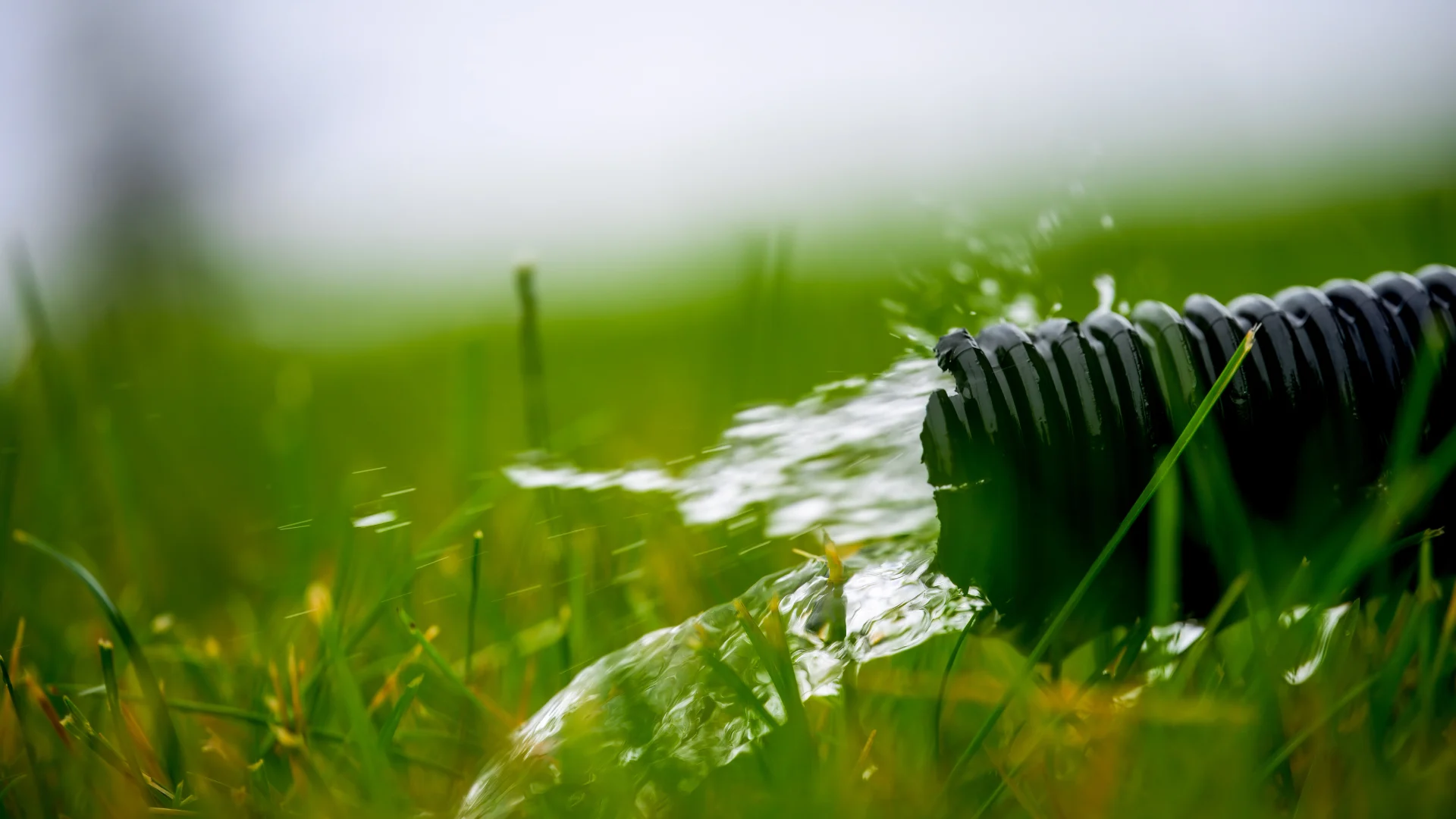
The sump pump vs backwater valve decision depends on which water source threatens the basement. A backwater valve helps stop sewage from flowing backward through the home’s sewer connection, while a sump pump removes groundwater collected by the foundation drainage system. Basement waterproofing addresses water entering through foundation walls, cracks, joints or surrounding soil.
The right choice depends on tracing the water to its source before equipment is selected. A floor drain that backs up, a wall crack that leaks and groundwater rising into a sump pit describe three different failure paths, even when they appear during the same storm.
Sump Pump vs Backwater Valve: The Basic Difference
A backwater valve is installed in a building sewer line. It normally stays open so wastewater can leave the house, then closes when flow reverses from the municipal sewer toward the property.
A sump pump sits in a basin below the basement floor. Water from weeping tile or an interior drainage system enters the basin, and the pump sends it through a discharge pipe to an approved location away from the foundation.
The simplest comparison is:
| System | Main Risk Addressed | What It Does Not Fix |
| Backwater valve | Reverse flow from a sewer connection | Groundwater through walls, cracks or floor joints |
| Sump pump | Groundwater collected below or around the foundation | Sewage flowing backward through the building sewer |
| Basement waterproofing | Foundation seepage and water pressure around the structure | Municipal sewer backup unless separate protection is installed |
These systems can support one another, but they are not interchangeable. Choosing a product before diagnosing the water source can leave the actual risk unaddressed.
What a Backwater Valve Protects Against
A backwater valve protects the home when wastewater or storm-related flow begins moving in the wrong direction through the sewer connection. The valve’s flap or gate closes against the reverse flow, reducing the chance that contaminated water will enter through a basement floor drain, toilet, shower or other low fixture.
The City of Toronto advises homeowners not to use plumbing fixtures while the valve is closed because household water will be unable to drain normally and could back up inside the home.
A backwater valve is most relevant when:
- The neighbourhood has experienced sewer backups
- Water or sewage has previously risen from a floor drain
- Several fixtures gurgle or drain poorly during major rain
- The lowest plumbing fixtures are in the basement
- A plumbing assessment identifies reverse-flow risk
It does not stop rainwater from entering through a crack or groundwater from rising beneath the slab. It also needs access for inspection and cleaning. Debris can interfere with the moving parts, so the valve should not be buried behind permanent finishes without an accessible cover.
City Wide Group’s backwater valve installation and drain services page explains how sewer and main-drain problems are assessed and how backwater protection fits into a broader drainage plan.
What a Sump Pump Protects Against
A sump pump manages water that reaches a sump basin from weeping tile, an interior drainage channel or another approved foundation-drainage connection. When the water rises to the activation level, a float switch turns on the pump and the discharge line carries the water away.
A sump pump is most relevant when:
- Groundwater collects around or below the foundation
- The weeping tile drains to a sump basin
- Water appears at the wall-floor joint
- The basement has an interior perimeter drainage system
- The property has a history of groundwater-related seepage
A sump pump depends on more than the pump itself. The basin must receive water correctly, the float needs room to move, the check valve must prevent discharged water from falling back into the pit, and the exterior discharge point must direct water away from the foundation.
Power reliability also matters. Heavy rain can occur during an outage, so homeowners should ask how long a proposed battery backup can support the pump under realistic operating conditions. Battery age, pump demand and how frequently the system cycles all affect runtime.
City Wide Group’s guide to how sump pumps manage groundwater provides more detail on sump pits, pump types, discharge piping and check valves.
When Basement Waterproofing Is the Missing Layer
Basement waterproofing addresses water moving through or around the foundation. Common entry points include vertical cracks, porous masonry, deteriorated mortar joints, window openings, penetrations and the joint where the wall meets the floor.
Exterior waterproofing is designed to stop and drain water before it crosses the foundation wall. A typical system may include excavation to the footing, crack repair, a waterproof membrane, drainage membrane, new weeping tile and clean gravel.
Interior waterproofing manages water from inside when exterior access is limited or an interior drainage approach is better suited to the property. It may use a perimeter trench, perforated drainage pipe, wall membrane and a sump pump or other approved discharge connection.
Waterproofing is most relevant when:
- Water stains follow a foundation crack
- Dampness appears on one wall after rain
- Water enters at the wall-floor joint
- Concrete block or stone walls remain wet
- A window well fills and leaks
- Exterior grading directs water toward the house
A waterproofing system does not replace sewer-backup protection. A dry foundation wall can still be affected if sewage reverses through the building drain.
For a closer look at site-specific options, City Wide Group explains basement waterproofing in Toronto and the conditions that can make interior, exterior or combined protection appropriate.
Match the Symptom to the Likely Water Source
The location, colour, odour and timing of the water provide useful clues. They do not replace an inspection, but they can help homeowners describe the problem accurately.
Water Rising From a Floor Drain
Water or sewage rising from a floor drain points toward a drain blockage or sewer-backup problem. Stop using plumbing fixtures until the cause is understood, keep people and pets away from contaminated water and arrange a plumbing assessment.
Clear Water Along a Wall Crack
Water that follows a visible crack after rain is more consistent with foundation seepage. The repair may involve crack injection, exterior excavation or a broader waterproofing system depending on the crack, foundation type and surrounding drainage.
Water at the Wall-Floor Joint
Water along the cove joint can indicate groundwater pressure beneath or beside the foundation. Interior drainage, weeping-tile work, a sump system or exterior waterproofing may be considered after the source is confirmed.
A Sump Pit That Fills but Does Not Empty
A full pit may indicate pump failure, a stuck float, loss of power, a blocked discharge line or a failed check valve. Do not reach into a powered basin. Disconnect power safely and arrange service.
Damp Walls Without Standing Water
Condensation, slow seepage and high indoor humidity can look similar. A moisture assessment should consider wall temperature, ventilation, exterior drainage and whether dampness follows rainfall.
Water Near a Basement Window
A leaking window area may be caused by a blocked well drain, poor grading, a failed seal or water collecting above the foundation opening. The repair should address the exterior water path rather than relying only on interior caulking.
When a Home May Need More Than One System
A combined system is appropriate when the property faces more than one water pathway. An older Toronto home may have groundwater entering through aging weeping tile while also having basement plumbing fixtures vulnerable to sewer backup.
Common combinations include:
- Backwater valve plus sump pump for separate sewer and groundwater risks
- Exterior waterproofing plus new weeping tile to stop and redirect foundation water
- Interior drainage plus sump pump where outside excavation is restricted
- Waterproofing plus backwater valve when both seepage and reverse sewer flow are possible
- Sump pump plus battery backup where outages could disable the primary system
Adding a device without confirming its purpose can create cost without closing the real flood pathway. Each component needs a defined risk, a compatible drainage or discharge route and a maintenance plan.
Toronto’s 2026 Basement Flooding Subsidy
As of May 1, 2026, Toronto’s expanded Basement Flooding Protection Subsidy Program offers eligible property owners up to $6,650 per property. The expanded amounts apply to qualifying work completed on or after November 12, 2025.
Eligible measures include:
- A home plumbing assessment
- Installation or replacement of up to two backwater valves and alarms
- Installation or replacement of one sump pump and alarm
- Sump-pump battery backup
- Certain storm-sewer or external weeping-tile severance and capping work
The current maximums include up to $500 for a home plumbing assessment, up to $1,600 per eligible backwater valve, up to $2,250 for a sump pump and up to $300 for battery backup. Eligibility is subject to the City’s program limits and conditions.
Program conditions include property eligibility, contractor licensing, permits where required, inspections and supporting invoices. A backwater-valve installation requires a building permit and inspection before the valve is enclosed or covered.
General basement waterproofing is not listed as a stand-alone eligible measure. A waterproofing project may still be necessary, but homeowners should separate the flood-protection work that qualifies for a subsidy from other repairs recommended for the property.
City Wide Group’s summary of the Toronto basement flooding subsidy requirements explains the expanded program and the importance of starting with a diagnosis.
Before authorizing work, confirm the current rules directly with the City of Toronto. Submitting an application does not guarantee that a subsidy will be issued.
Questions to Ask Before Accepting a Quote
A good proposal should state which water source the recommended work is intended to control. It should also explain what risks remain after installation.
Ask:
- What evidence shows the water is coming from the sewer, groundwater or the foundation?
- Which fixtures, drains, walls or cracks were inspected?
- Is a camera inspection or home plumbing assessment recommended?
- Where will the sump pump discharge?
- Is a battery backup included, and what is its expected operating capacity?
- How will the backwater valve remain accessible for maintenance?
- Does the work require a building permit or municipal inspection?
- Which items may qualify for a subsidy?
- What waterproofing, restoration or electrical work is excluded?
- What maintenance should the homeowner complete each year?
Be cautious when one product is presented as the answer to every basement-water problem. A credible recommendation should connect each component to a specific risk found at the property.
Build the Protection Plan Around the House
A practical flood-protection plan ranks the confirmed risks first, then coordinates plumbing, foundation and drainage work in the order the house requires. A finished basement with past sewer backup may need a different first step than an unfinished basement with one leaking foundation wall.
City Wide Group can assess signs of sewer backup, sump performance, drainage failure and foundation seepage, then explain which measures address each problem. That gives homeowners a clearer basis for comparing quotes and investing in work that matches the actual water pathway.
Frequently Asked Questions
Do I need a sump pump if I already have a backwater valve?
You may need both because the devices control different water sources. The backwater valve addresses reverse sewer flow, while the sump pump removes groundwater collected by the foundation drainage system.
Will a backwater valve stop groundwater from entering my basement?
No, a backwater valve does not waterproof foundation walls or remove groundwater. Cracks, failed weeping tile, poor grading and hydrostatic pressure require separate investigation and repair.
Does basement waterproofing prevent a sewer backup?
Basement waterproofing does not normally stop sewage from reversing through a building sewer. Sewer-backup risk is addressed through plumbing and drainage measures such as a properly selected and maintained backwater valve.
Can I finish the basement after installing a backwater valve or sump pump?
Yes, but access covers, the sump basin and serviceable components must remain reachable. Finishes should also be planned so inspections, cleaning, pump replacement and valve maintenance can occur without unnecessary demolition.
How can I tell whether basement water is sewage or groundwater?
Sewage often has an odour, discolouration or visible waste and may rise through a drain or fixture, while groundwater is more likely to appear near walls, cracks or the floor perimeter. Treat uncertain water as contaminated until a qualified professional identifies the source.