


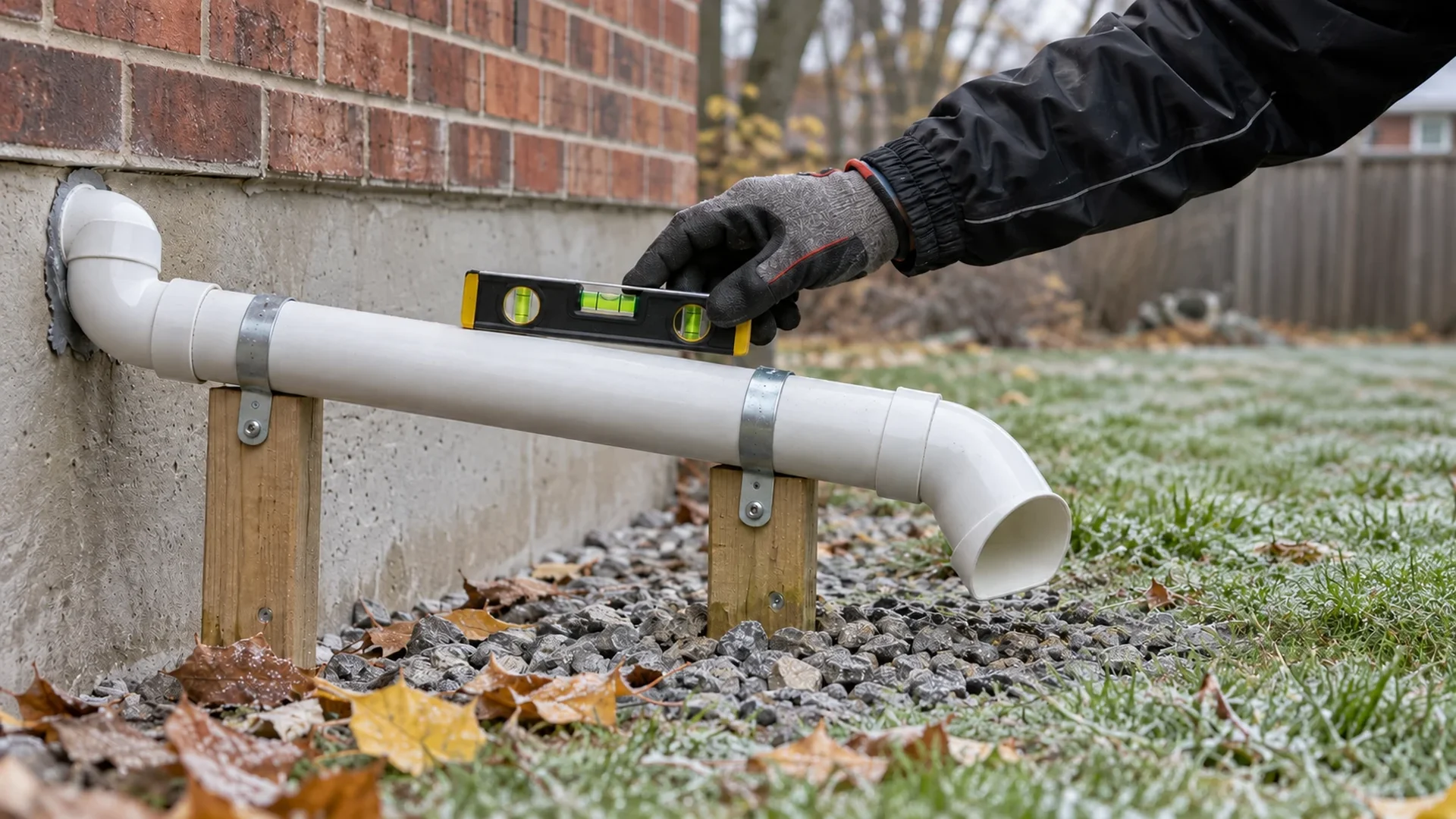
Yes, a sump pump discharge line can freeze when water remains inside an exposed pipe or ice blocks the outlet. A frozen discharge line can prevent water from leaving the system even while the pump has power. Before winter, check the outdoor drainage route and arrange an inspection if water is not moving away properly.
The discharge line is the pipe that carries collected groundwater from your sump pump to an approved outlet. Your pump, float switch and battery backup may all be working, but they cannot provide reliable protection without a clear route for that water.
Why Sump Pump Discharge Lines Freeze
Discharge lines become vulnerable when water collects in sections exposed to freezing temperatures. Low spots, sagging hoses and obstructed outlets can leave water behind after a pumping cycle.
A flexible extension lying across an uneven lawn may form pockets that hold water. A pipe that has shifted or settled can develop a similar problem. Once that retained water freezes, the available opening becomes smaller or closes entirely.
The outlet matters too. Snow piled over the termination, leaves caught around it or ice accumulating where water lands can interfere with discharge. A system that appeared to work during autumn rain may behave differently after several freezing nights.
Correct slope helps exposed piping drain between cycles. The required arrangement depends on the pump, piping and property, so copying a neighbour’s installation is not a substitute for checking your own system.
Signs Your Pump Is Running Without Discharging Properly
A pump that runs while the sump water level fails to fall needs prompt attention. Ice is one possible explanation, but a blocked intake, faulty check valve or pump problem can produce similar symptoms.
Use the observations below to describe the problem when requesting service.
| Observation | What Needs Checking |
|---|---|
| The pump runs, but the pit level stays high | A discharge obstruction, pump performance or unusually heavy inflow |
| Water returns immediately after the pump stops | Check valve operation and the piping arrangement |
| Little or no water appears at a visible outlet during operation | A possible obstruction, damaged line or pumping problem |
| A pipe joint leaks when the pump runs | Pipe damage, a failed connection or downstream restriction |
| Ice repeatedly builds around the outlet | Outlet placement, drainage and winter exposure |
Don’t use sound alone to judge performance. A motor can operate without successfully moving enough water. If the pit is approaching overflow, arrange urgent service. Stay out of water near electrical equipment, and do not handle plugs, cords or the pump while standing on a wet surface.
For symptoms that occur in mild weather as well, City Wide Group’s explanation of why a sump pump keeps running covers other causes worth investigating.
What to Check Safely Before Freezing Weather
A visual check can reveal an obstructed outlet or damaged extension before winter makes access difficult. Start outside in daylight, with safe footing and no need to open the system.
Locate the discharge outlet and follow the visible pipe or hose. Look for crushed sections, loose connections, dips and areas where water could collect. Check whether leaves, stored items or landscaping block the end. Notice where discharged water goes. Water collecting beside the house, running back toward the foundation or crossing a walkway indicates that the route needs attention.
Before a routine pump test, consult the manufacturer’s instructions and confirm that the discharge route is clear. Do not add water to test a system already showing signs of blockage or an unusually high pit level.
Make sure you have the following details:
- Photographs of the outlet and visible piping.
- The pump’s make and model, if accessible without moving equipment.
- Whether the problem follows freezing nights, rain or snowmelt.
- Any alarm messages or changes in operating sound.
These details help a contractor distinguish a seasonal outlet problem from a fault inside the sump system.
Why Removing a Hose Is Not a Complete Winter Plan
Removing a detachable extension may reduce freezing risk in some installations, but it can also leave water discharging too close to the foundation. The correct winter arrangement must preserve a suitable drainage route.
A long garden-style hose across the lawn and a permanent discharge pipe are different installations. Do not disconnect fixed piping or remove components simply because an online checklist recommends taking off a hose.
Ask the installer which parts, if any, are intended for seasonal removal. Confirm where water will land afterward and how it will drain during both freezing weather and a midwinter thaw.
Likewise, wrapping a poorly draining pipe in insulation does not correct a low spot. Heat cable should only be considered where the product, pipe material and installation conditions permit it, with appropriate professional advice.
Avoid open flames, improvised electrical heating and attempts to force tools into an iced pipe. A damaged discharge line can create another leak while leaving the original obstruction unresolved.
Where Sump Pump Water Should Go in Toronto
Toronto’s homeowner guidance says sump pump water should discharge onto a permeable surface at least two metres from the foundation wall. A lawn, garden or gravel area may be suitable, provided the route does not create another drainage problem.
Distance is only one part of the assessment. The ground must allow water to move away rather than return toward the house. Discharge should not create an ice hazard on a walkway or negatively affect a neighbouring property.
Do not redirect groundwater into a floor drain or sanitary sewer as an improvised winter solution. Existing drainage connections and proposed changes need to be checked against local requirements. Municipal guidance can differ across the GTA. A Toronto recommendation should not be treated as approval for an installation in another municipality.
Where groundwater is collected through an interior basement drainage system, the discharge route should be assessed as part of that complete system.
What Battery Backup Can and Cannot Do
Battery backup provides an alternative power source during an outage, but it doesn’t remove ice from a discharge pipe. A backup pump sharing an obstructed outlet can face the same restriction as the primary pump.
During a service visit, ask how the primary and backup systems discharge and what happens if the outdoor route becomes blocked. The answer depends on the actual installation.
City Wide Group’s guide to sump pump battery backup explains the power protection side of the system. Winter readiness also requires checking that pumped water can reach its destination.
Arrange an Inspection Before the Problem Repeats
Repeated freezing warrants an assessment of the discharge layout, rather than another temporary thaw. A contractor can check exposed piping, slope, outlet placement, check valve operation and the pump’s ability to handle incoming water.
Explain whether the problem affects one section or the full route. Photographs taken during freezing conditions can help identify an obstruction that has disappeared by the appointment.
Our experts can assess sump pump and drainage concerns to help identify the appropriate repair. For homeowners arranging basement waterproofing in North York, the inspection should consider both the indoor collection system and where water goes outside.
Frequently Asked Questions
Does a sump pump water alarm need Wi-Fi?
A basic standalone sump water alarm does not need Wi-Fi to sound locally. Remote notifications require a compatible connected alarm and whichever internet or cellular service that product uses.
Will replacing the pump require replacing the entire discharge line?
Replacing a sump pump does not automatically require replacing the entire discharge line. The contractor should check the existing pipe’s condition and compatibility with the replacement pump before deciding which components can remain.
What should I arrange if I will be away during winter?
Arrange for someone to check the basement and sump system while you are away during winter. Leave the alarm instructions and contractor’s contact information where that person can find them, and explain which signs require an urgent call.