


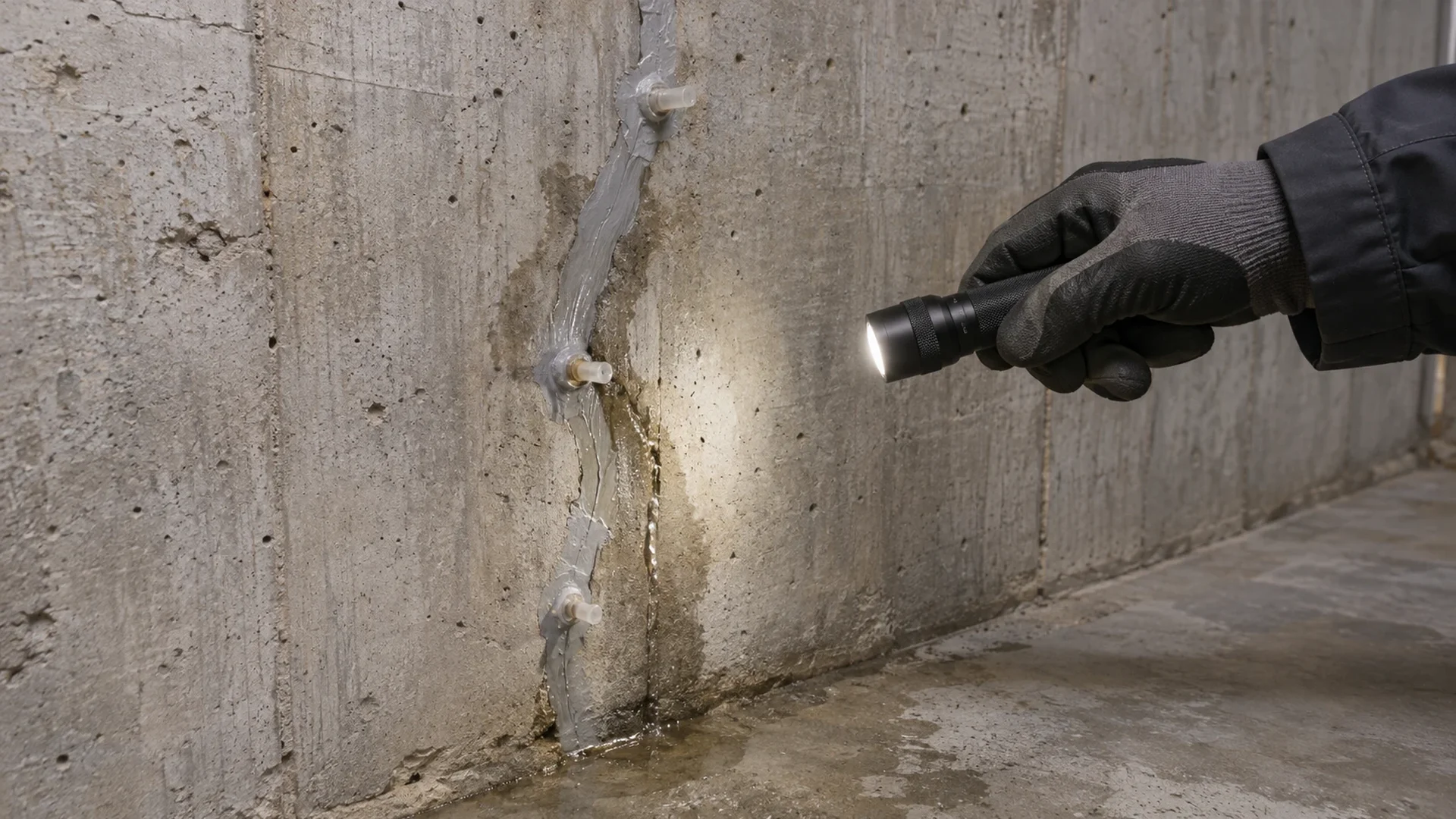
A wet patch beside an old foundation repair is frustrating, especially when you thought the leak was behind you. If water is appearing near visible injection ports, it is tempting to assume the original repair has failed.
That’s one possibility, but the location of the moisture alone does not establish where it entered. Before paying to have the crack repaired again, the inspection needs to determine whether water is passing through the repaired crack or arriving from somewhere nearby.
Establish Where the Water Is Entering
The first useful distinction is whether water is coming through the repaired crack, beside it or from the wall-floor joint. Each observation points the inspection toward different possibilities.
If the wall is exposed, photograph the area while it is actively wet, provided it is safe to approach. Capture a wider view as well as a close-up so the contractor can locate the repair relative to windows, corners and the floor. Water behind drywall is harder to trace. A wet baseboard directly below a repaired crack may suggest a connection, but a nearby window, pipe penetration or wall joint could also be involved.
Record when the leak starts. Rain, snowmelt and persistent dampness during dry weather provide different clues. Include recent exterior changes, such as a new patio, altered downspout or landscaping beside the affected wall.
Avoid deliberately soaking the foundation to reproduce the leak yourself. A controlled investigation should not add water without a plan to contain it.
Why a Repaired Foundation Crack Can Leak Again
Recurring leakage can result from an incomplete seal, additional movement or a water source outside the original repair scope. These possibilities need to be separated before deciding that another injection will solve the problem.
The Repair Did Not Seal the Full Path
Crack injection aims to introduce repair material into the crack, rather than simply cover its visible surface. If part of the water path remains open, leakage may continue or return when wet conditions recur.
Old coatings, previous repairs, crack geometry and installation conditions can affect the work. Visible injection ports show that an injection was attempted, but they do not establish how completely the material filled the crack.
The Crack or Surrounding Concrete Moved
A repair can be affected by movement after installation. The American Concrete Institute cautions that epoxy repair may be unsuitable where subsequent crack movement is expected. Movement does not automatically mean the house needs underpinning. It does mean the repair method should reflect the cause and whether that movement is ongoing.
The Leak Comes From Another Entry Point
A successfully sealed crack does not waterproof every nearby joint or opening. Water can still enter through another crack, deteriorated masonry, a penetration or the connection between wall and floor. Hydrostatic pressure is pressure exerted by water around or beneath the foundation. Sealing one opening does not eliminate that pressure or repair a separate drainage defect.
Why Foundation Material and Repair Products Matter
Repair selection depends on the foundation and the purpose of the work. A poured-concrete wall, hollow concrete block wall and older stone foundation cannot be assessed as identical surfaces.
An isolated crack in poured concrete may suit injection when its condition and accessibility permit it. Water moving through block cavities or multiple mortar joints may require a different approach.
Product choice also matters. Some polyurethane injection systems are formulated to seal water paths, while epoxy systems can be specified to bond concrete in suitable structural repairs. The exact product’s properties and instructions matter more than the broad material name. Stopping a leak is not proof that a structural concern has been corrected. Similarly, a structural repair may still need a separate waterproofing detail.
City Wide Group’s foundation crack repair information provides background on repair approaches. For a recurring leak, the assessment should also account for the previous material and work.
When Another Injection May Be Appropriate
Another injection may be appropriate where the leak is isolated, the crack is suitable for treatment and the surrounding wall does not show a broader problem. A contractor needs to establish why the earlier repair failed or remained incomplete.
Ask what evidence supports repeating the method. The proposed work should explain how the existing repair will be handled, where the new material will be introduced and which area the repair covers. Access affects the job too. A finished wall may need a defined opening, while shelving or equipment can limit working space.
A repair recommendation should also distinguish between stopping the active leak and addressing any separate moisture or drainage issue. A small repair can be appropriate, but its scope must match the observed problem.
When Drainage or Broader Waterproofing Needs Assessment
Water appearing across several locations, along the wall-floor joint or beyond the previous repair can justify investigating the drainage system. Those patterns do not establish a diagnosis on their own.
Exterior foundation waterproofing may be appropriate where access to the outside wall is needed to address water entry and drainage conditions. It can involve excavation, repairs, membrane installation and related drainage work.
An interior drainage system collects and redirects incoming water where that approach suits the property. Its outlet and sump arrangement, where required, are part of the design. The choice should follow the findings. Recurring leakage alone does not justify assuming that every wall requires excavation or a full perimeter system.
Signs That Need Structural Review
Visible displacement, bowing, continuing crack growth or changes elsewhere in the house warrant structural assessment. A crack’s direction alone cannot establish whether it is safe.
Tell the contractor about newly sticking doors, changing floor levels or repeated new cracks. These observations can help determine whether a structural engineer should be involved before waterproofing proceeds. The existing City Wide guide to when a foundation crack needs structural assessment explains that distinction. Keep this separate from judging whether an old leak repair was effective.
What to Request Before Approving the Next Repair
A useful written proposal identifies the observed entry point, recommended work and limits of the repair. It should also describe access, restoration responsibilities and the warranty terms.
Gather the previous invoice, photographs, product details and warranty certificate if available. Contact the original contractor before authorizing alterations that could affect an existing warranty claim.
Ask whether the quote includes opening and reinstating finishes, moving obstructions or restoring disturbed landscaping. Confirm how the contractor will explain any additional problems discovered once the area is accessible.
Our experts can assess recurring basement leakage and recommend work based on the foundation and drainage conditions. Providing the repair history helps the team investigate what changed instead of treating the wall as an entirely new problem.
Frequently Asked Questions
Should I repaint the repaired area before the inspection?
Leave the affected area unpainted until the recurring leak has been assessed. Fresh paint can conceal staining and moisture patterns that help the contractor trace the problem.
Can a contractor assess the problem if the wall is dry on appointment day?
A contractor can begin assessing a recurring leak even when the wall is dry. Photographs, weather notes and the repair history help, although further investigation may be needed before the source can be confirmed.
Does an old repair warranty automatically transfer to a new homeowner?
An old repair warranty does not automatically transfer unless its terms allow it. Ask for the original certificate and written confirmation of any transfer requirements, coverage limits or exclusions before relying on it.