



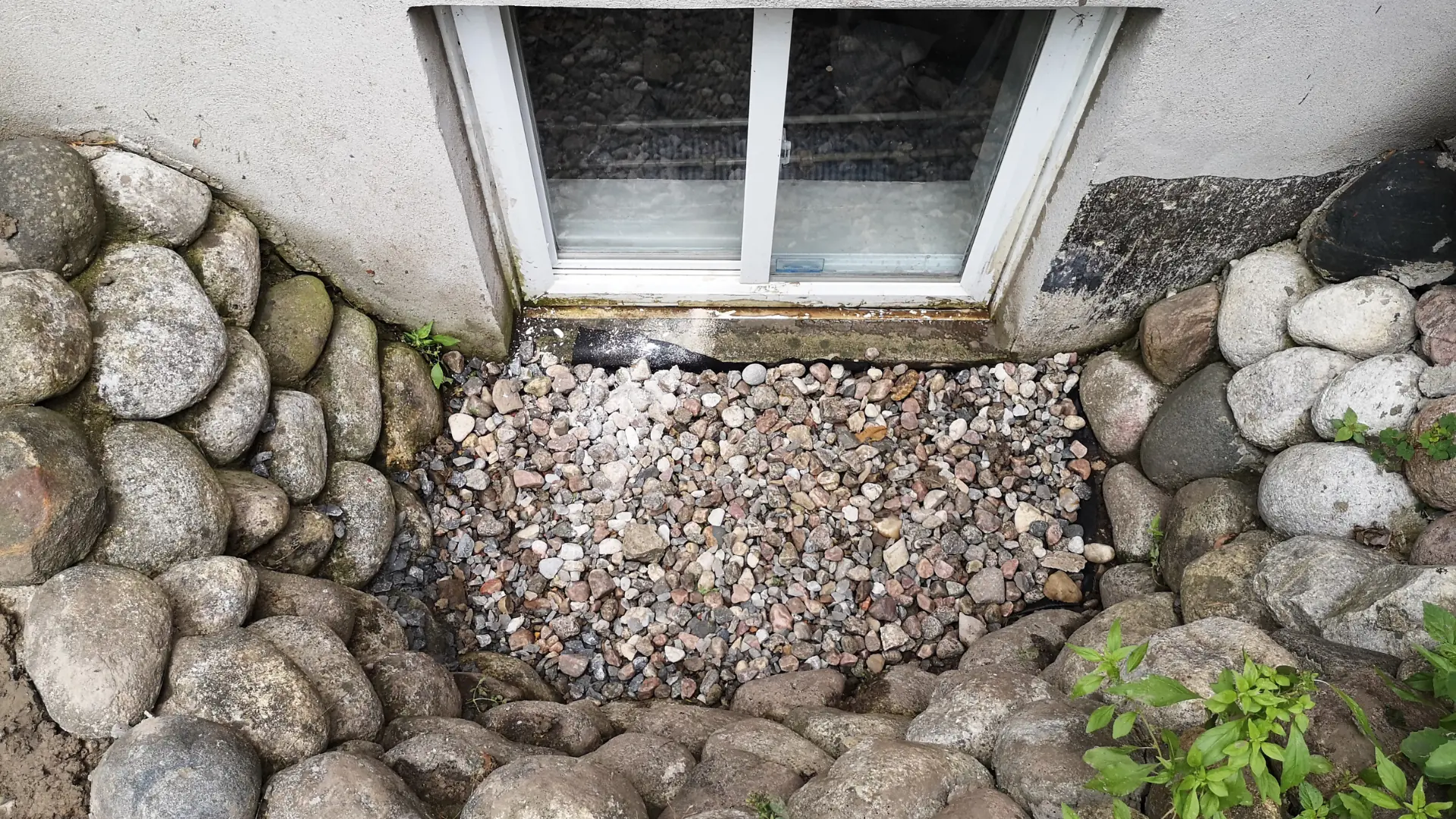
Basement windows do not get a lot of attention until something goes wrong. Then spring arrives, the snow starts to melt, a heavy rain hits, and suddenly there is damp drywall, staining below the sill, or a puddle in the corner. For many homeowners, the surprise is not that water showed up. It is where it showed up. They thought the problem would come through a crack in the wall or at the floor, not through a window well.
That is exactly why window wells deserve more attention in spring. They sit at or below grade. They collect leaves, dirt, snow, and runoff. And if they are not draining properly, they can hold water right against a part of the home that was never meant to resist standing water for long. The Government of Canada’s basement window maintenance guide points out that rain, ice, and snow can collect in window wells because they are low spots, and that basement windows are not designed to resist water buildup. It also notes that wells should drain properly and stay clear of debris.
Why spring exposes window well problems so quickly
Winter loads window wells with everything that makes drainage harder. Snow packs down, ice forms, and debris gets trapped where you cannot easily see it. When temperatures swing above freezing, that water has to go somewhere. If the gravel base is clogged, the drain connection is missing, or the well is simply overwhelmed, the water level rises and starts pressing against the window frame.
This is one reason the City of Toronto’s flood prevention advice tells homeowners to seal window wells, keep drainage features clear, and make sure the grade around the home moves water away from the foundation. The issue is rarely just the window itself. It is usually the combination of surface water, poor drainage, and an opening below grade.
City Wide Group’s own blog on February basement waterproofing tips for Ontario homes makes a strong point that still applies in spring. Early warning signs are often subtle. A faint smell, a damp band under the window, or staining that shows up after a thaw can all be clues that the problem is active even before there is visible flooding.
What a failing window well usually looks like
The obvious sign is standing water in the well after rain. But by the time homeowners notice that, the drainage issue may already be well developed. More often, the first clues are inside. You may see peeling paint below the window, damp trim, rust on metal components, or discoloration on the wall near the opening.
Sometimes the window area feels fine in dry weather and becomes damp only after a storm. That pattern matters. It tells you the source is likely exterior water pressure rather than everyday indoor humidity. It is also worth checking whether the well is full of leaves or if the gravel at the bottom looks compacted with soil. A clean-looking cover does not guarantee the well beneath it is draining.
City Wide’s article on 7 things you can do to stop your basement leaking after heavy rain is helpful here because it reinforces the outside-in logic of water control. If soil is sloping inward or runoff is landing beside the house, the window well often becomes the easiest collection point.
Why window wells often get misdiagnosed
A lot of homeowners assume water around a basement window means the window itself failed. Sometimes the frame or caulking is part of the problem, but not always. Often the bigger issue is that the well is functioning like a bucket instead of a drainage area. In those cases, replacing the window alone may not solve much.
The Government of Canada recommends checking for cracks and narrow gaps around basement windows, removing old caulking before applying new exterior sealant, and making sure the property is graded correctly so water moves away from the home. That combination is important. A good seal helps, but good drainage is what prevents the water from sitting there in the first place.
That is also why City Wide’s exterior versus interior waterproofing guide is a useful supporting read. Their explanation that exterior work is meant to stop water before it enters the basement is especially relevant for window well trouble. If water is building up outside, the best long-term fix usually starts outside too.
What homeowners should check each spring
Start with the simple visual inspection. Remove debris. Check that the well is not holding old leaves, mulch, or packed soil. Look at the gravel base. If it has become buried or compacted, drainage is already being reduced. Then look at the window frame itself for worn caulking, separated joints, or visible gaps.
Next, watch how water behaves during a rain. Does it run toward the well from a walkway, flower bed, or downspout area? Does the cover shed water away properly, or is it funneling water in? These details matter because they reveal whether the problem is maintenance, grading, or a larger drainage design issue.
The City of Toronto also recommends disconnected downspouts discharge well away from the foundation and notes that window wells, grading, and weeping tile systems all play a role in reducing basement flood risk. If the rest of the drainage system is underperforming, the window well is often where that weakness shows up first.
When a window well issue becomes a waterproofing issue
Once water starts entering around a basement window, the problem is bigger than glass and caulking. You are dealing with water concentration against the foundation. If the well is staying wet, the surrounding soil is likely staying wet too. Over time, that can contribute to broader seepage, material damage, and repeated moisture in the lower part of the wall.
That is why homeowners searching for basement waterproofing Toronto solutions should not treat a leaking window well as a cosmetic problem. Spring leaks around a below-grade window often point to a drainage system that needs attention before the issue spreads to nearby walls, flooring, or finishes.
A finished basement raises the stakes even more. One damp wall section can mean damaged insulation, trim, flooring, and stored belongings before the source is properly identified.
The value of fixing the problem before peak rain season
The best time to deal with a vulnerable window well is before spring storms become summer downpours. Once the season turns wet, small failures can become bigger and more expensive very quickly. A little staining can become wet drywall. A musty smell can become a remediation issue. A well that drains slowly can become a full entry point during one severe rainfall.
Spring is ideal because it gives you real-world evidence without forcing you to wait for a full flood event. If the area is already showing signs of trouble, it is a good time to investigate whether the answer is improved drainage, exterior waterproofing, grading correction, crack repair, or a combination of those steps.
FAQs
Are window well covers enough to prevent leaks?
Covers help reduce debris and can limit direct water entry, but they do not replace proper drainage. If the well cannot drain or water is being directed toward it, a cover alone will not solve the problem.
Can a leaking basement window mean my weeping tile is failing?
It can. Some window wells connect to perimeter drainage systems, and if the system is blocked, overwhelmed, or deteriorated, water may build up in the well instead of draining away.
Should I re-caulk the window or call a waterproofing company?
If the issue is minor and clearly limited to worn sealant, re-caulking may help. But if the dampness returns after rain, the well holds water, or the surrounding wall shows repeated moisture, the smarter step is to have the drainage and waterproofing conditions assessed properly.