



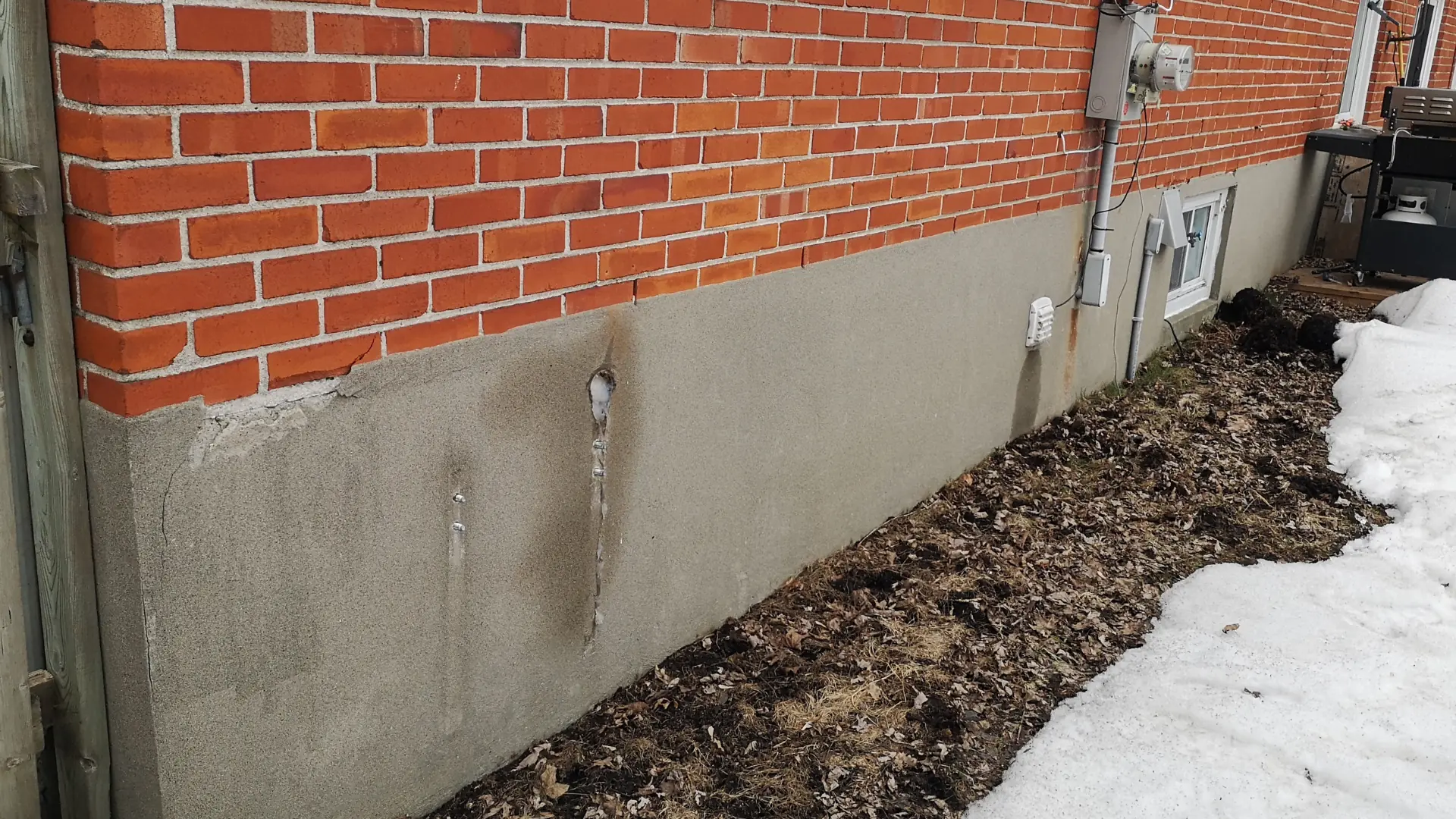
Why February is the month basement problems show up
If you have ever noticed a basement smell that seems to appear out of nowhere, February is often the culprit. It is the month where winter starts to loosen its grip, but the ground is still frozen, snow piles are heavy, and meltwater has to go somewhere. When water cannot soak into frozen soil, it tends to collect around foundations and find the easiest route inside.
That is why many homeowners book basement waterproofing services in February. You are not waiting for a full spring melt or the first major rain to confirm what you already suspect. You are getting ahead of it, while the signs are still small and the fixes are usually simpler.
The February warning signs you should never brush off
A basement does not need to flood to be a problem. In February, the early signs are often subtle: a damp band along the bottom of a wall, white chalky residue on concrete, a musty smell that comes and goes, or a small puddle near a floor drain after a warm day.
If you are unsure what you are looking at, it helps to read how water typically gets in. City Wide Group breaks down the usual culprits in how basements start leaking, and once you see the patterns, it becomes easier to connect the dots in your own home.
One quick tip: take a photo of anything that changes from week to week. Moisture patterns that grow, shift, or darken are often telling you the water is active, not historical.
What is happening outside your home in February
In winter, water management becomes a strange mix of snow, ice, and drainage. A downspout that normally sends water away from the house can become blocked by ice. A section of grading that is “good enough” in summer can become a shallow basin once snowbanks pile up and refreeze.
City Wide Group recently shared practical winter-specific steps in Winter Basement Waterproofing Tips for 2026 That Actually Work, including the reminder that freeze-thaw cycles do not just create slippery walkways. They also stress foundation walls and widen tiny entry points over time.
For a broader Canadian checklist, the Government of Canada’s Flood Ready guidance includes practical basement-focused prevention steps, like checking your sump pump and sealing common entry points. You can scan their basement protection steps for flood readiness as a useful baseline for what to review each season.
Foundation cracks in winter: small gaps, big consequences
Concrete moves. Soil moves. Winter makes both more dramatic. That is why a hairline crack you ignored in November can become the spot that starts weeping in February.
If you have visible cracking or you suspect water is tracking behind finished walls, it is worth looking into foundation crack causes and solutions. The earlier you address a likely entry point, the less chance moisture has to damage framing, insulation, drywall, or flooring behind the scenes.
Interior vs exterior waterproofing: what February homeowners should consider
One of the biggest misconceptions is that waterproofing is one single thing. In reality, the right approach depends on where the water is coming from and what access you have to the foundation.
In many cases, interior waterproofing is about controlling and redirecting water safely once it has reached the foundation, often using drainage channels and a sump system. It can be an efficient choice when exterior excavation is not practical.
Exterior waterproofing focuses on stopping water before it enters by protecting the foundation wall from the outside and improving drainage at the source. When conditions allow, it can be one of the most direct ways to prevent seepage.
A February inspection is valuable because you can often see active patterns (or the conditions that create them), which helps determine whether you need a localized repair or a broader system.
The two mistakes that cost homeowners the most
The first mistake is reaching for cosmetic fixes that hide moisture instead of solving it. Sealants and “waterproof” paints can look appealing, but they rarely hold up if there is real hydrostatic pressure behind the wall. When you need a real fix, you are usually looking at targeted leaky basement repair and drainage planning, not a surface coating.
The second mistake is guessing instead of diagnosing. City Wide Group lays this out clearly in The Basement Waterproofing Do’s and Don’ts That Can Save You Thousands, especially the point that treating symptoms without confirming the path of water is how homeowners end up paying twice.
If you want a Toronto-specific resource to complement a professional inspection, the City also outlines prevention steps like sump maintenance and backwater considerations in their guide on how to prevent basement flooding.
Why booking in February can save stress later
Spring is busy in waterproofing for a reason. Once the thaw and heavy rains arrive, you are competing for time slots, and water problems tend to escalate quickly.
In February, you have a chance to get clarity. You can decide what matters now, what can wait, and what should be addressed before you invest in finishing or renovating the space. If you want to talk through options and timing, you can start with a free estimate request and a straightforward assessment of what is actually happening in your home.